Crypto market crash, what a drawdown looks like and how investors position for it
Want articles like this for your own video to promote it on YouTube and Google? Order them through the Telegram bot @sat_sit_bot. Articles with your video embedded are written and posted by the bot itself — on popular topical sites (no ads). Try it free: 50 articles on us.
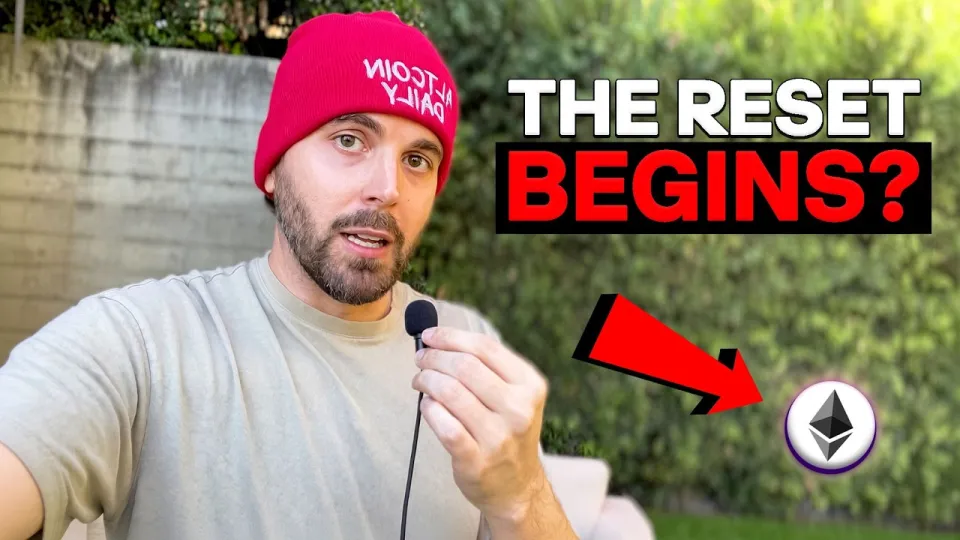
· based on the channel Altcoin Daily
A crypto market crash is a fast, broad decline across Bitcoin and altcoins that forces leveraged positions to close and pushes sentiment from greed to fear; investors get through it by knowing their position sizes, their time horizon and their cash reserves before the drop, not during it. The Altcoin Daily breakdown of the current sell-off focuses on exactly that gap between panic headlines and portfolio decisions, and it is a useful frame for anyone wondering whether this is a crash, a correction or normal volatility. Merchandise tied to the channel is available through the Altcoin Daily shop.
What actually makes a crypto sell-off a crash
A crash is defined by magnitude and speed, not by the colour of a single candle. Bitcoin falling from a local high into the low $80,000s is a drawdown; whether it becomes a crash depends on how far and how fast it goes and how much leverage sits behind it. Historically, crypto corrections of 20–30% inside a bull market are routine, while bear phases have produced 50–80% declines from the peak. The distinction matters because the response is different: a correction is a chance to rebalance, a crash is a test of whether your position size was survivable in the first place.
The numbers behind the current drawdown
One figure circulating in the discussion puts Bitcoin at $80,707 on October 24, 2026, with a five-year compound annual growth rate of roughly 5.78%. That number is worth sitting with. A 5.78% five-year CAGR is far below the returns most crypto investors mentally anchor to, and it is a reminder that entry timing dominates long-run performance more than most holders admit. If your thesis is that Bitcoin compounds at 30–50% a year, a 5.78% realised figure over five years is a direct challenge to that thesis — and a reason to check what you actually paid, not just what you believe.
Why leveraged and concentrated portfolios break first
Leverage converts a correction into a forced exit. When price falls, margin requirements rise and liquidations cascade, which is why crashes accelerate: each liquidation adds selling pressure that triggers the next one. A spot holder with no borrowing can wait; a holder at 3x or 5x often cannot. Concentration adds a second layer of risk — an altcoin portfolio built around a handful of names can fall 60–80% while Bitcoin falls 20%, so the portfolio drawdown is rarely the index drawdown. The practical rule is that any position you would be forced to sell at the bottom was too large or too leveraged before the drop started.
Averaging down: the maths and the trap
Averaging down lowers your average entry price, but it also increases your total exposure to the asset that is falling. Buy 1 unit at $100 and 1 unit at $50 and your average is $75 — a 25% gain if price returns to $100, but you now hold twice the risk. The technique works when three conditions hold: the asset survives, you have cash reserved specifically for this, and the position stays within a size you can hold through another 50% decline. It fails when averaging down is funded by selling stronger assets or by borrowing. Viewers of the Altcoin Daily discussion repeatedly frame the dip as an opportunity; the discipline that separates that from a mistake is having the cash set aside in advance.
How long-term holders actually behave during a crash
Long-term holders reduce the frequency of price checks, not the size of their conviction. A common pattern described by experienced investors is going weeks without logging in, keeping the portfolio on a fixed allocation and holding a separate cash reserve for opportunities. That behaviour is not indifference — it is a deliberate removal of the daily price feed from the decision loop. The other half of the discipline is refusing to redeploy money that is earmarked for real-life needs, such as housing or emergency savings, into a volatile asset during a drawdown.
Typical questions and doubts from the community
Three themes dominate the questions around this sell-off. First, whether the channel and its hosts will still be around in the next cycle — a fair question about information sources, and a reminder to treat any single commentator as one input, not an oracle. Second, what the actual altcoin holdings look like, which reflects a broader desire for transparency about how calls are made. Third, price targets such as $1,000 Solana by 2028, which are useful only when paired with a probability and a position size. On the macro side, one recurring doubt is whether a lighter regulatory environment is genuinely bullish or already priced in; regulation is a slow variable and rarely the trigger for a single-week crash.
Practical checklist before the next leg down
- Calculate the portfolio's total drawdown if every position fell 50% — if that number is intolerable, reduce size now, not later.
- Separate long-term holdings from trading capital and never fund one with the other.
- Keep a cash reserve sized for at least one additional 30% decline.
- Set allocation bands (for example, Bitcoin versus altcoins) and rebalance mechanically rather than emotionally.
- Write down the exit conditions for every leveraged position before entering it.
Sources and links
Summary
A crypto market crash is a test of portfolio construction, and the current drawdown exposes the same weaknesses every cycle does: leverage, concentration and cash that was never reserved. The figures discussed — Bitcoin near $80,707 on October 24, 2026 and a five-year CAGR of about 5.78% — argue for realistic return expectations rather than cycle mythology. Averaging down and holding through volatility are valid strategies only when position size and reserves make them survivable. The Altcoin Daily video breakdown is a useful companion to this checklist, and channel merchandise is available at the Altcoin Daily shop.
Key takeaways
- Bitcoin traded near $80,707 on October 24, 2026, with a five-year CAGR of about 5.78% according to a widely cited figure in the discussion.
- A market crash is defined by the size and speed of the decline, not by a single red day; corrections of 20%+ and bear phases of 50–80% are the historical reference points.
- Averaging down lowers the average entry price but increases total exposure, so position sizing matters more than the entry itself.
- Long-term holders typically check prices less often and keep cash reserves ready rather than reacting to every headline.
- The Altcoin Daily breakdown frames the current sell-off as a sentiment and positioning problem as much as a price problem.
Questions & answers
Is the current crypto decline a crash or a normal correction?
It depends on magnitude and speed. Corrections of 20–30% inside a bull market are routine, while bear phases have historically produced 50–80% declines from the peak. A move into the low $80,000s for Bitcoin is a drawdown; it becomes a crash when leverage forces cascading liquidations.
Does averaging down work in a crypto crash?
It works when the asset survives, the cash was reserved in advance and the resulting position is still small enough to hold through another 50% decline. It fails when it is funded by borrowing or by selling stronger assets, because it increases exposure to the very thing that is falling.
What return should I expect from Bitcoin over five years?
A figure cited in the discussion puts Bitcoin's five-year CAGR at about 5.78% as of October 24, 2026, with the price near $80,707. That is far below the 30–50% annual returns many holders assume, which is why entry price matters more than cycle narratives.
How often should long-term holders check prices during a sell-off?
Many experienced holders deliberately check less often — sometimes going weeks without logging in — and rely on fixed allocations and a separate cash reserve instead. The goal is to remove the daily price feed from the decision loop while keeping the portfolio survivable.
Source: Crypto Investors Are In Serious Trouble (market crash) · Markdown version