Meme coin trading works as a risk budget system that keeps emotions and exit plans in check
Want articles like this for your own video to promote it on YouTube and Google? Order them through the Telegram bot @sat_sit_bot. Articles with your video embedded are written and posted by the bot itself — on popular topical sites (no ads). Try it free: 50 articles on us.
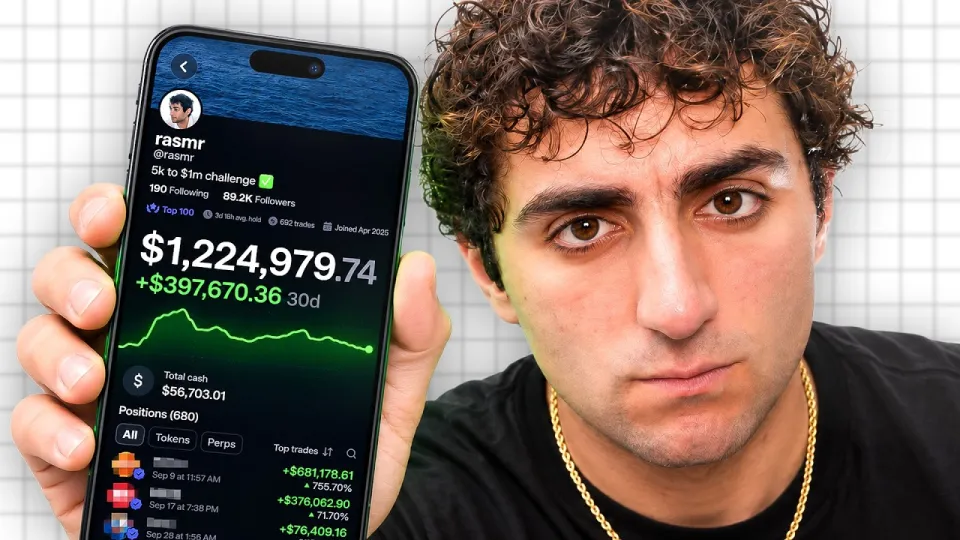
· based on the channel rasmr
A meme coin is a token whose price is driven mainly by narrative, community attention and liquidity rather than by cash flow, so trading it is a risk-management exercise first and a research exercise second. The workable approach is to fix a risk budget, verify who launched the token and why, and pre-plan exits by market capitalization instead of deciding in the heat of a chart. A trading account with low fees and fast execution, such as the one offered via registration on fomo.family, removes friction, but it does not replace the rules below.
What a meme coin actually is and why the narrative decides the outcome
A meme coin is a highly reflexive asset: its price rises because other people expect it to rise, and that expectation is carried by a story. The story can be a mascot, a political moment, an in-joke inside a community, or a fresh meta that the market has not seen for a few weeks. Because there is no earnings report to anchor valuation, the narrative and the speed at which it spreads do most of the work.
That has three practical consequences:
- Timing beats analysis. Being early in a narrative pays more than being right about technology or tokenomics.
- Liquidity is the real exit. A token with a thin pool can show a large paper profit that cannot be sold without crushing the price.
- Attention decays. Meme cycles are short; a position held past the peak of attention usually gives back most of its gains.
The rasmr breakdown treats this as five years of accumulated pattern recognition compressed into a short format, and the recurring theme in viewer reactions is that the mechanics are simple while the discipline is not.
Build a risk budget before you look at a single chart
The first decision in meme coin trading is not which token to buy but how much capital a single idea is allowed to consume. A risk budget is a fixed percentage of your trading capital that you are genuinely prepared to lose on one position — commonly 1–5% for a beginner, and never money needed for anything else.
A workable sequence:
- Define total trading capital separately from savings and income.
- Set a per-position cap, for example 2% of that capital.
- Set a monthly cap across all meme positions, so a bad week cannot wipe the account.
- Write the number down before opening the terminal; the number does not change because a chart looks exciting.
This single rule answers the most common failure described by traders in their first month: sizing up after a win, then giving back the whole gain plus principal on the next idea. Small capital is not a disadvantage here — it is the correct starting condition.
Check who launched the token and what narrative it rides
Before any entry, answer two questions: who released this token, and what story is it selling? The launch source matters because it determines the first buyers and the first sellers. Tokens announced early to a connected circle of traders tend to move before public attention arrives, which means late buyers are effectively providing exit liquidity for that circle.
Use a short checklist:
- Launch source. Was the token deployed by a known team, a launchpad, or an anonymous wallet funded minutes before deployment?
- Narrative freshness. Is the meta new this week, or a fourth copy of something that already peaked?
- Holder distribution. What share do the top 10 wallets hold, and are any of them the deployer or linked wallets?
- Liquidity depth. How much can be sold at a 5–10% price impact? If the answer is a few thousand dollars, the position is not real.
- Contract flags. Mint authority, freeze authority, trading pauses and tax functions are all reasons to walk away.
A coin with a strong story, distributed holders and deep liquidity can still fail; a coin with a weak story, concentrated holders and thin liquidity usually does.
Plan exits by market cap instead of waiting for a single top
The most repeated regret among meme coin traders is holding a large unrealized profit and selling nothing. The fix is mechanical: decide exit tiers in market-cap terms before entry and execute them without renegotiating.
An example ladder for a position entered near a $1M market cap:
- Sell 25–33% at 2x.
- Sell another slice at 5x.
- Sell another at 10x, keeping a small runner for a tail outcome.
- Move the stop to breakeven once the first tier is filled.
This does not maximize the theoretical peak, and that is the point. Partial exits convert a volatile bet into a realized result, and they remove the emotional decision at the exact moment when judgment is worst. Sellers usually begin around round market-cap levels because that is where earlier buyers set their own tiers, so anticipating those levels is more useful than predicting the absolute top.
The emotional traps that turn winners into round trips
Emotion is not a side issue in meme coin trading; it is the primary cause of losses. Two patterns account for most damage: refusing to take a loss and hoping the chart recovers, and refusing to take a profit because the chart might keep going.
Signs that rules have been replaced by feelings:
- Adding to a losing position without a pre-written plan.
- Buying a vertical candle because it "looks strong".
- Raising the exit target after the original target hits.
- Checking the chart every few minutes and changing the plan each time.
- Sizing the next trade based on the last outcome rather than the budget.
The antidote is boring: written entry, written exit tiers, written invalidation level, and a rule that no position is adjusted while the market is moving fast. Traders who survive multiple cycles describe the same shift — from trying to catch every move to executing one plan repeatedly.
Common questions traders ask before their first position
Beginners tend to ask the same handful of things, and the answers are consistent. How much capital is enough? Start with an amount whose total loss would not change your month. What makes a coin likely to rug? Thin liquidity controlled by one wallet, plus a deployer holding a large supply. Is a token tied to a big upcoming release a good investment? Only if the narrative is not already priced in and the launch source is verifiable. How do you avoid round-tripping gains? Pre-commit to partial sells at defined market-cap tiers and treat the first fill as non-negotiable.
Useful links
- Open a trading account via fomo.family — the referral link from the video.
- Join the Catalyst trading Discord — the community group referenced by the channel.
Final thoughts on building a repeatable meme coin process
Meme coin trading rewards process over prediction: a fixed risk budget, a launch-source and liquidity check, and pre-planned exits by market cap will outperform any attempt to time a top. The emotional failures are predictable and therefore preventable, which is the most useful takeaway from five years of pattern watching. The channel rasmr condenses that experience into a short, practical format, and the viewer discussion around it confirms that discipline, not information, is the bottleneck. If you want to test the framework with low friction, start with a fomo.family registration and keep the first positions small.
Key takeaways
- Treat every meme coin position as money you can lose entirely — size it as a fixed slice of capital, not as a bet sized by excitement.
- Check who launched the token and what narrative it rides before entry; the story usually decides who buys after you.
- Plan exits in market-cap tiers (for example 2x, 5x, 10x) and sell part of the position at each tier instead of waiting for a single top.
- Liquidity, holder concentration and unlock schedules are the fastest rug filters; thin liquidity plus one big holder is the classic setup.
- Emotions are the main source of losses: round-tripping a 50–100% gain and averaging into a loser are the two most repeated mistakes.
Questions & answers
How much money should a beginner put into a meme coin?
Start with a fixed slice of trading capital you can lose entirely — commonly 1–5% per position and a monthly cap across all meme trades. The amount matters less than the rule: it should not change based on how confident a chart looks. Small capital is the correct starting condition, not a limitation.
What are the clearest signs a meme coin will rug?
Thin liquidity controlled by one wallet, a deployer or top wallets holding a large share of supply, and contract functions such as mint authority or trading pauses. A token announced early to a closed group of traders before public launch is another warning, because late buyers become exit liquidity.
How do I avoid giving back a 100% gain?
Decide exit tiers in market-cap terms before entering — for example selling a third at 2x, another slice at 5x and another at 10x — and move the stop to breakeven after the first fill. Partial exits convert paper profit into realized profit and remove the decision from the moment of maximum excitement.
Is it worth buying a coin tied to a big upcoming release?
Only if the narrative is not already priced in and the launch source is verifiable. Hype around a known event attracts copycat tokens and front-running, so check holder distribution and liquidity depth before treating it as an investment rather than a trade.
Source: 5 Years of Memecoin Knowledge in 12 Minutes · Markdown version